
Job Overview
Location: Ajax, Ontario
Structure: Semi-detached, two-storey residential structure with brick on the first floor, siding on the second floor, and an attached garage
Problem: Wildlife activity reported in the attic during early morning hours, consistent with squirrel behaviour
Service: Squirrel removal and full roofline exclusion
Visits: Three
Summary
Our team completed a three-visit squirrel removal and exclusion service after attic noise and roof activity were reported. The work focused on identifying the primary roofline entry, allowing animals to exit humanely, and completing permanent exclusion across vulnerable roof features. A follow-up inspection addressed secondary roof damage, and a final visit confirmed successful resolution.
Background / Property Context
The structure is a semi-detached home with multiple roof transitions, standard asphalt shingles, roof vents, and plumbing penetrations. These features can present access points when gaps develop along the drip edge or vent bases.
Customer Concern
The homeowner reported repeated early-morning attic noise and visible wildlife activity on the roof. The concern was ongoing access into the attic space and potential damage to roofing components.
Inspection & Findings
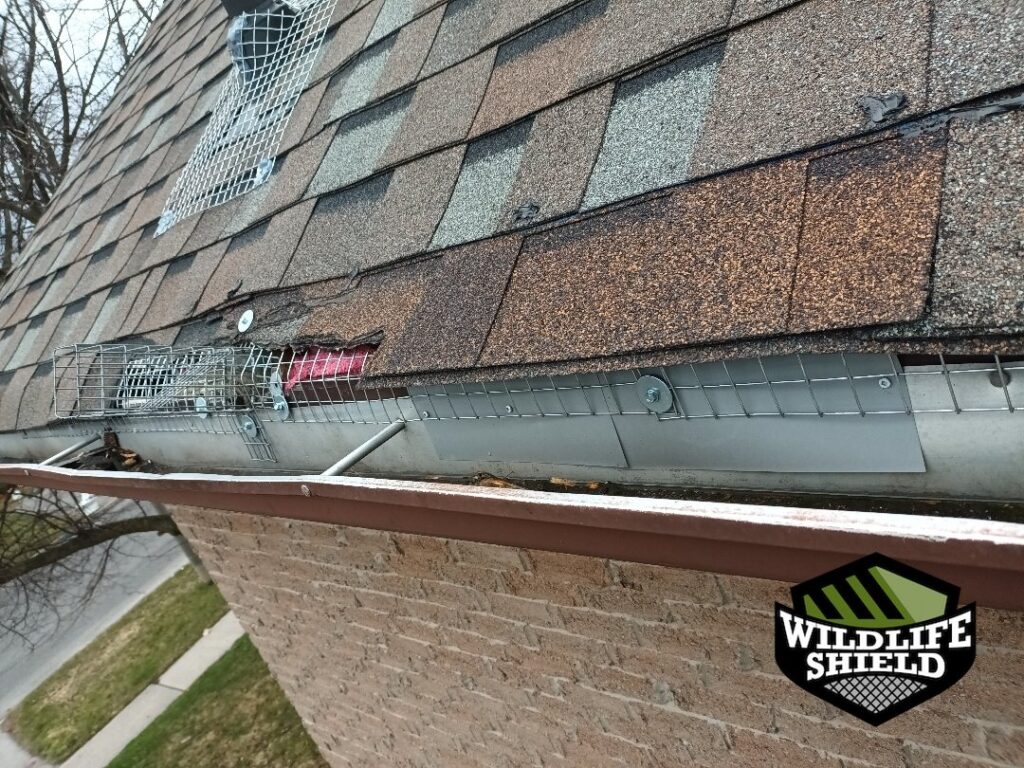
During the initial exterior roof inspection, we identified an extended opening along the roof edge. While there were several potential access points, the exposed drip edge presented the most likely primary entry. Roof vents and plumbing penetrations were also assessed as secondary risk areas.
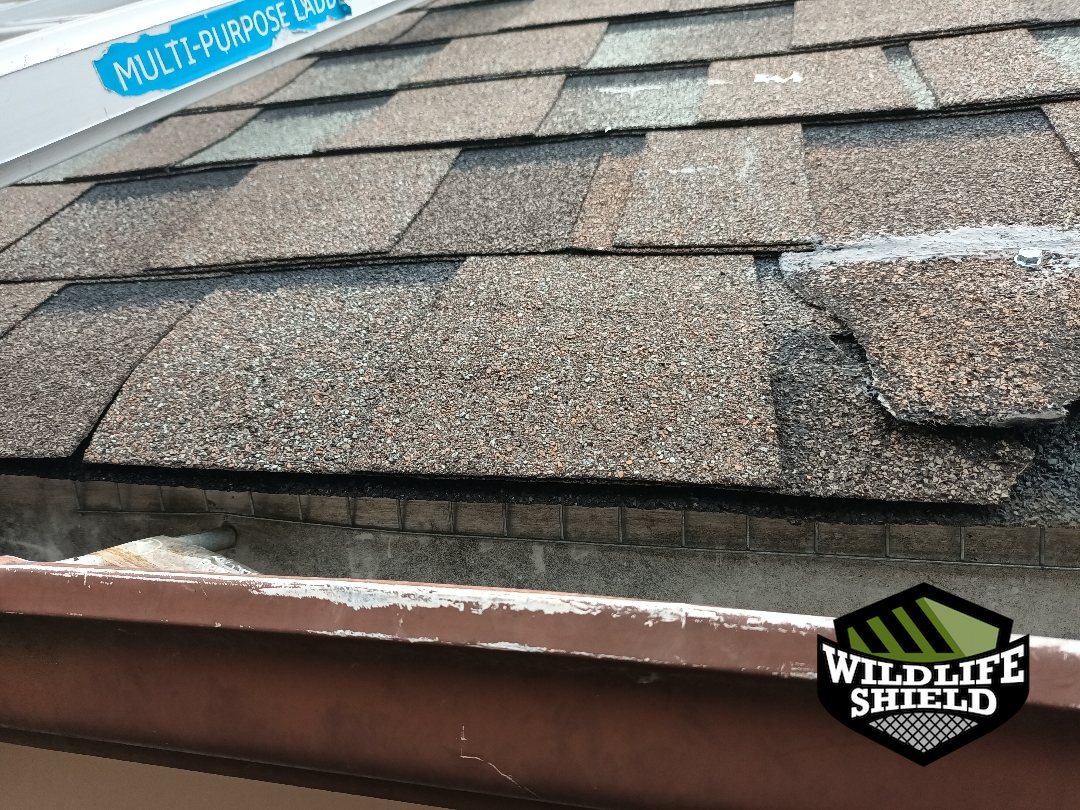
On a subsequent visit, no new entry points were observed; however, damaged shingles were noted in one section of the roof, consistent with external wildlife interference.
Cause Analysis
Squirrels commonly exploit loosened shingles and open drip edges to access attic spaces, particularly along rooflines that provide continuous cover. Extended gaps along the roof edge increase the likelihood of repeated entry attempts. Once access is established, roof features such as vents and plumbing penetrations become secondary vulnerabilities.
Treatment / Removal
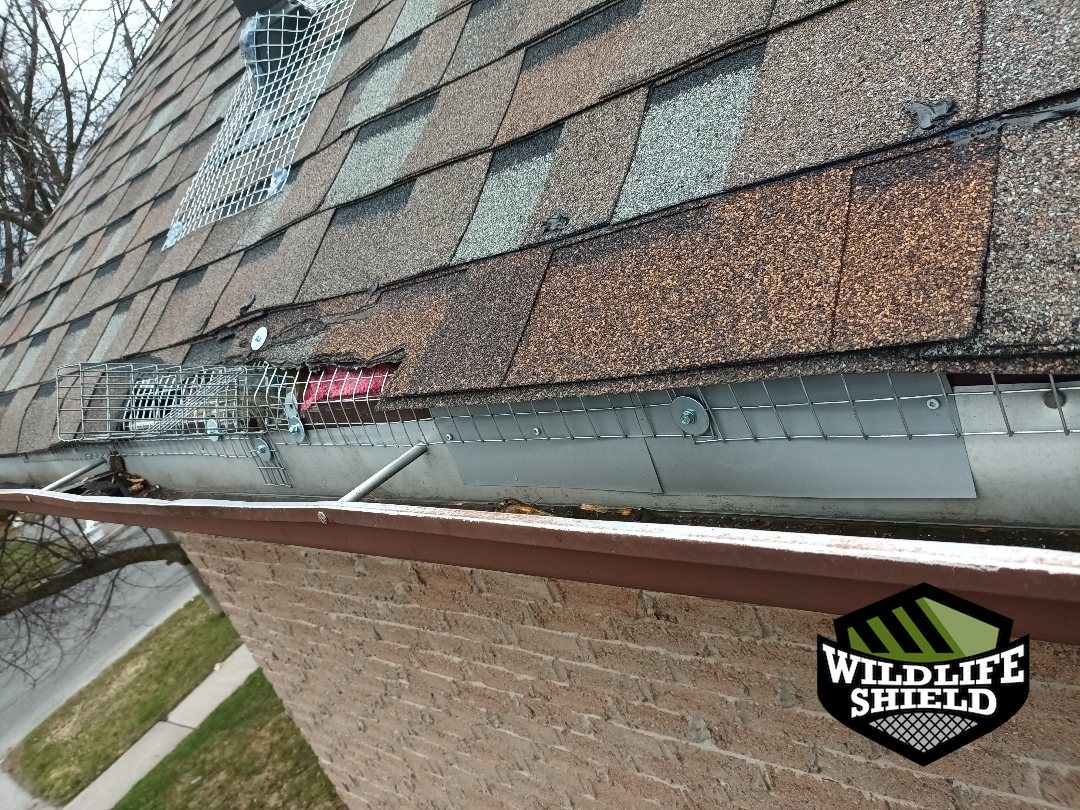
A humane, non-lethal removal process was used. A one-way door was installed at the confirmed primary entry to allow squirrels to exit without re-entry. This approach ensured animals could vacate the attic safely while preventing continued access.
Exclusion & Repairs
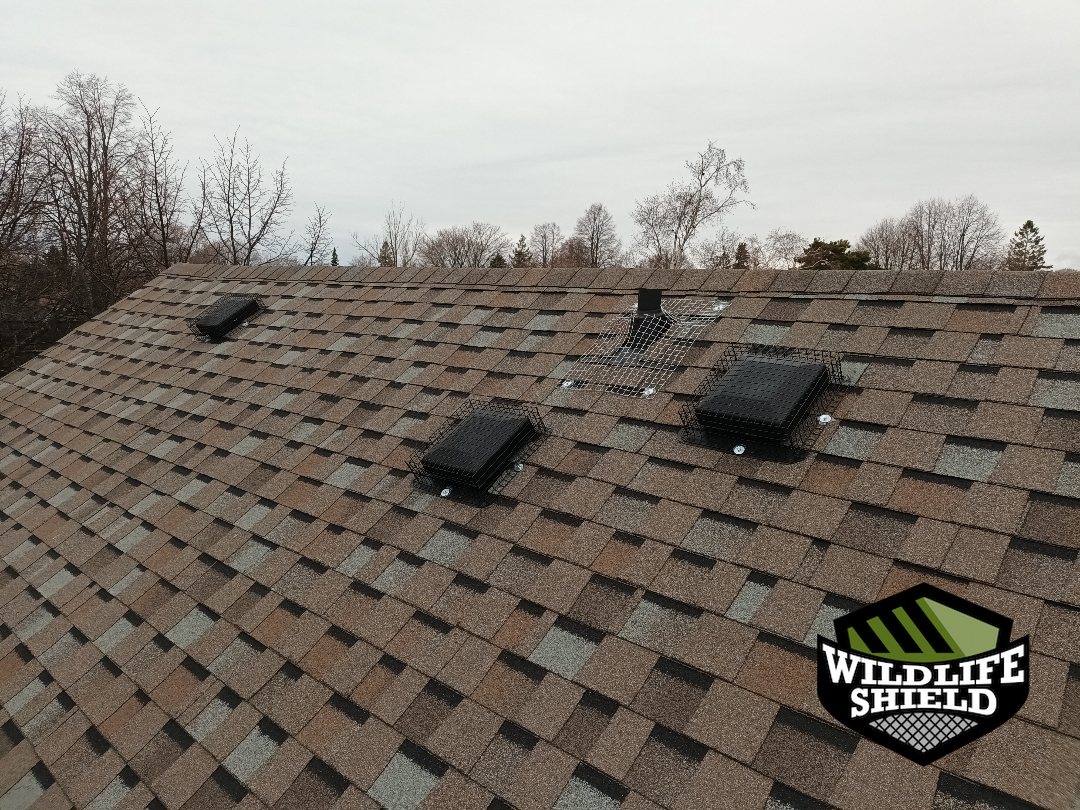
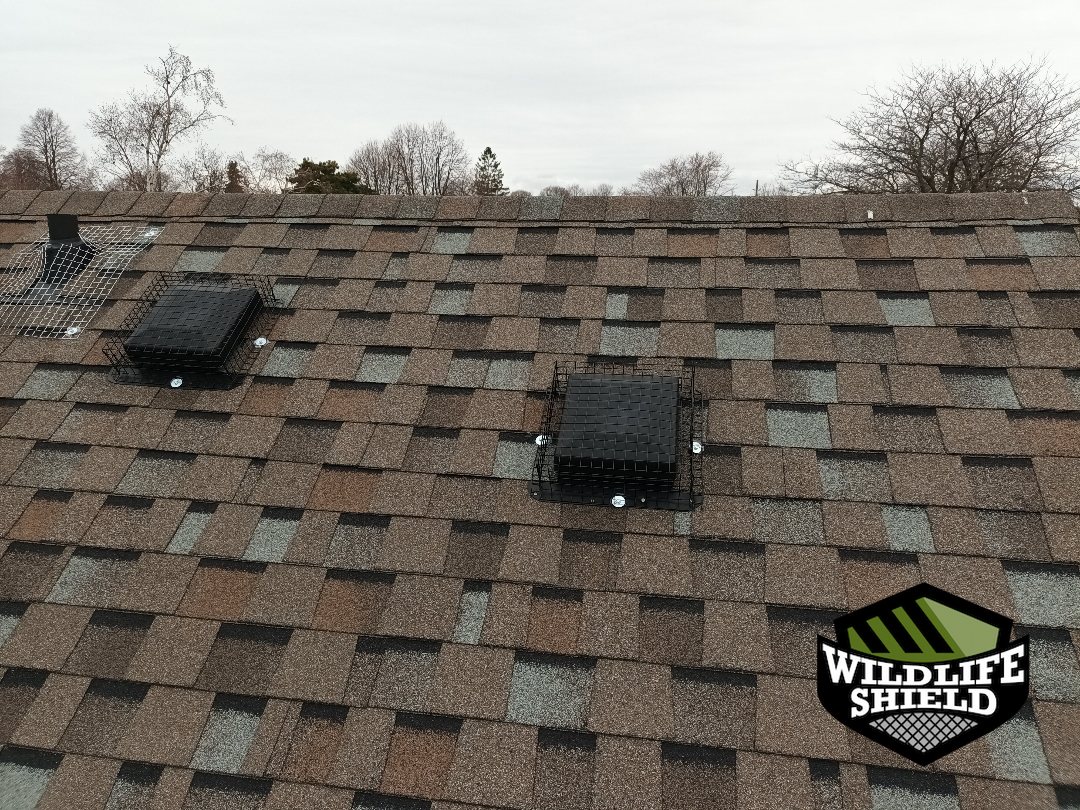
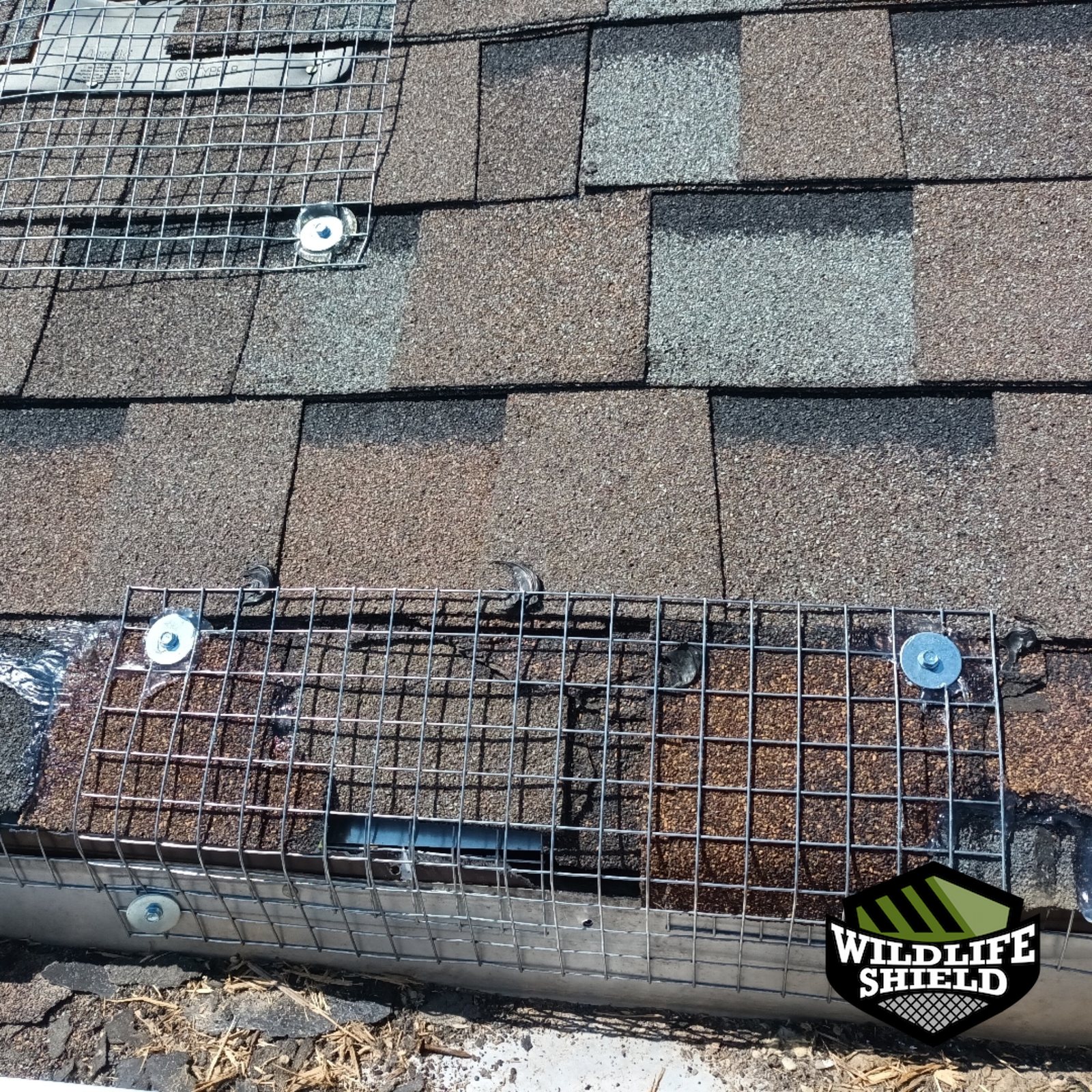
Following installation of the one-way door, approximately twelve feet of galvanized steel mesh was installed along the drip edge to permanently seal the opening. Six plastic roof vents were secured with galvanized steel vent cages, and the bases of two plumbing vents were sealed with galvanized steel mesh.
During the second visit, a section of shingles showed signs of damage from external wildlife activity. Five feet of flashing was installed to protect the area and reinforce the roofline.

Outcome & Confirmation
On the final visit, the homeowner reported no further wildlife activity. The one-way door was removed, the opening was sealed, and all exclusion work was inspected. No additional entry points or signs of activity were found, and the attic remained quiet following completion.
Technician Notes
Grant completed all inspections, installations, and follow-up work across three visits. The exclusion materials were secured flush to the roofline and vent bases, and all previously identified risk areas were addressed. No further wildlife issues have been reported since the final inspection.
This service was completed by our Ajax wildlife team. For wildlife removal inquiries in Ajax, contact 519-900-1180.